
TGA Test Method for Benzene in Sunscreens Now Available

The Australian Sunscreen Council (ASC) is making available the analytical method used by the Therapeutic Goods Administration (TGA) to identify and quantify residual benzene in sunscreen products. The method was released by the TGA under Freedom of Information and is attached below for members, manufacturers, contract laboratories and other interested parties.
Benzene is not an ingredient in sunscreens, but trace amounts can be introduced through raw materials, propellants or packaging. The TGA method gives the industry a clear reference for how the regulator tests for it, so that in-house and third-party testing can be aligned with the regulator's approach. The full TGA method, including instrument conditions, standard preparation, batch structure, calculation of results and example chromatograms, is linked here:
What the method covers
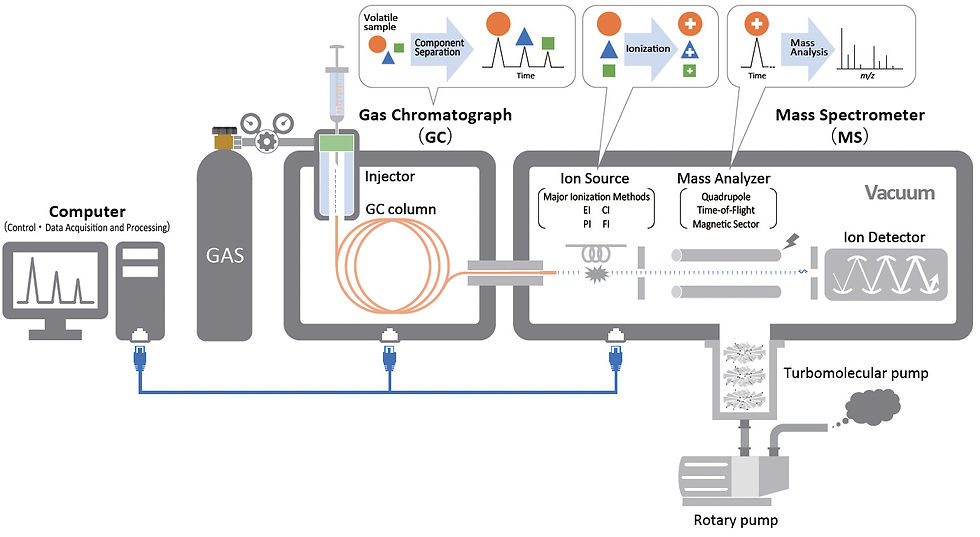
The method applies to aerosol, mist and lotion sunscreens and uses headspace gas chromatography with tandem mass spectrometry (HS-GC-MS/MS). Key points:
Scope: identification of benzene at or above 0.040 µg/g, and quantification over a range of 0.10 to 9.0 µg/g. For context, the method references a regulatory limit of 2.0 µg/g (2 ppm).
Low-temperature headspace: samples are incubated at 37 °C rather than at elevated temperatures, specifically to avoid generating benzene as an artefact during analysis. This is an important design feature, as some published methods can overstate benzene levels because of heat-induced breakdown of other ingredients.
Sample preparation: approximately 500 mg of product is weighed directly into a headspace vial and diluted in dimethyl sulfoxide (DMSO), which is used because sunscreens are not water-soluble. Aerosols are primed and sprayed directly into the vial.
Internal standard: deuterated benzene (benzene-d6) is used throughout to correct for matrix and instrument variability.
Confirmation criteria: a result is only reported as positive when the target ion and two confirming ions are detected at the expected retention time, with ion ratios within tolerance of the calibration standards. This guards against false positives.
Quality controls: every batch includes solvent blanks, a nine-level calibration curve, an independently prepared control standard injected at regular intervals, and duplicate spiked recovery samples for every product tested. Calibration drift across the batch must stay within ±15%.
Reporting: all samples are analysed in duplicate and the average is reported to two significant figures, provided recovery and identification criteria are met.
Why this matters
Public confidence in sunscreen depends on transparency about how products are tested. Having the regulator's own method in the public domain means:
Manufacturers and their laboratories can test to the same standard the TGA applies.
Test results from different laboratories can be compared on a like-for-like basis.
Consumers and health professionals can see that testing is designed to detect benzene at levels well below the regulatory limit while avoiding artefacts that would produce misleadingly high readings.
The ASC encourages members and testing partners to review the method and consider adopting it, or an equivalent validated approach, as part of routine quality control.
Why this method was released
The method came to light through the TGA's investigation into benzene in aerosol sunscreens. In response to reports of contamination of aerosol sunscreens with benzene, TGA Laboratories tested a range of products supplied in Australia. Samples were obtained from sponsors, targeted to cover different sponsors and manufacturers, and in some cases purchased online. The testing was performed using a validated headspace gas chromatography tandem mass spectrometry method (HS-GC-MS/MS). That method is the one attached to this article. Therapeutic Goods Administration
Testing was finalised on 18 products, with three found to contain benzene above the 2 ppm limit. All three were Banana Boat products from the sponsor Edgewell Personal Care Australia Pty Ltd. In December 2021 the TGA issued Edgewell a notice of compliance test failure and recommended a consumer-level recall of four batches of Banana Boat aerosol sunscreens. Edgewell recalled all batches of the affected products with an expiry date of 31 January 2024 or earlier, with the TGA noting that exposure at the levels detected would not be expected to cause serious adverse health effects. Edgewell has said benzene is not an ingredient in any Banana Boat products and that the unexpected levels came from the propellant that sprays the product out of the can. Testing for benzene in aerosol sunscreen products being supplied in Australia | Therapeutic Goods Administration (TGA) +3
The test method, along with the compliance notices, recall correspondence and other records from that investigation, was subsequently released by the TGA under the Freedom of Information Act as FOI 4139. The ASC is republishing the method from that release so that the approach the regulator used to identify the Banana Boat contamination is accessible to everyone, not just those who go looking through the FOI disclosure log.
Download the method
The full TGA method, including instrument conditions, standard preparation, batch structure, calculation of results and example chromatograms, is linked here:
The method references TGA in-house validation requirements and an internal SOP (Chem-SOP-9) for calibration linearity, which are not included in the release. Laboratories adopting the method should apply their own validation and acceptance criteria for those elements.
The Australian Sunscreen Council represents the Australian sunscreen industry and works with regulators, researchers and the public to support safe, effective sun protection.


