Our mission is to preserve and enhance Australia’s global leadership in sunscreen safety and efficacy by working in partnership with government, unions, industry, health experts, and community organisations.

Protect Queensland Schools, Worksites and the Great Barrier Reef from Sunscreen Chemicals Banned Overseas

Queensland can maintain strong sun protection while choosing sunscreen products without 4-MBC, homosalate or oxybenzone.
Petition 4642-26 asks the Queensland Government to review what it purchases for state schools, government workplaces and state-funded infrastructure. It does not seek to stop Queenslanders using sunscreen, and it does not ask for any product to be removed from shop shelves.
Queensland residents can read and sign the official parliamentary petition before 9 November 2026.

The Petition of residents of the State of Queensland draws to the attention of the House that sunscreen chemicals banned or restricted overseas because of hormone-disruption or environmental concerns are still being used on Queensland children, outdoor workers and vulnerable people through schools, government workplaces, public worksites and State-funded infrastructure projects.
Petitioners are particularly concerned that 4-Methylbenzylidene Camphor, also known as 4-MBC, is still used in sunscreen products available in Queensland despite being banned or prohibited in 78 countries due to safety and hormone-disruption concerns. Petitioners are also concerned about Homosalate, a suspected hormone-disrupting chemical subject to overseas restrictions, and Oxybenzone, which Hawaii has already prohibited from sunscreen to protect coral reefs and marine ecosystems.
The Queensland Government should bring its procurement policies into line with the findings of the Federal Government regulator. The TGA has identified Homosalate as presenting a chronic exposure risk to public health and safety and determined that no safe dose of 4-MBC for use in sunscreens could be established.
Queenslanders should be concerned that children, workers, waterways and the Great Barrier Reef are increasingly exposed to chemicals of concern. Safer Queensland made alternatives such as zinc oxide already exist.
Your petitioners, therefore, request the House to review the Queensland Government's sunscreen procurement policy with a view to ensuring that sunscreen products purchased by Queensland Government departments, State schools, Government workplaces and State-funded infrastructure projects do not contain the chemical UV filters 4-MBC (4-methylbenzylidene camphor), Homosalate or Oxybenzone.
Source: Parliament of Queensland, E-Petition 4642-26.
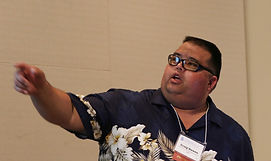
Dr. Craig Downs
Dr Craig Downs is one of the world’s leading forensic ecotoxicologists. As Executive Director of Haereticus Environmental Laboratory, Dr. Downs led the scientific investigations that underpinned Hawaii’s landmark reef-safe sunscreen laws. Read more.

Dr. Alan Jones
Dr Alan Jones is a pioneer in workplace sun protection and early detection, He founded Chermside Medical Centre and later led Skin Patrol, which has performed over 250,000 on-site skin cancer screenings. Read more.

Dr. Denis Dudley
Dr Denis Dudley is a triple-board-certified OB-GYN (Canada, UK, USA) and a global authority on Paediatric and Maternal Sunscreen Safety. He has spent 30 years researching the impact of chemical UV filters on pregnant women and children. Read more.

Dr Leslie Laquieze
Dr Leslie Laquieze is an international expert in sunscreen testing, photoprotection, skin pharmacology and dermocosmetic claim substantiation. As a pharmacist-scientist with advanced training in skin science, clinical evaluation and product performance testing, she brings global expertise in SPF, UVA, broad-spectrum and water-resistance assessment.

Mgr. Mehrdad Mirzaei
Mgr. Mehrdad Mirzaei is a licensed pharmacist and PhD researcher specialising in organic UV filters, skin barrier science and photoprotection. His doctoral research at Charles University examines how commonly used sunscreen filters interact with the stratum corneum and influence the microstructure and function of the skin lipid barrier.

Joseph DiNardo M.S.
Joseph “Joe” DiNardo is a veteran cosmetic toxicologist and ingredient safety expert with more than four decades of experience across formulation science, regulatory affairs, clinical research and consumer product safety. A former senior Revlon-Almay research executive, he brings international expertise in cosmetic toxicology, sunscreen ingredient assessment and environmental chemical safety. Read more.

Dr. Russell Hills
Dr Russell Hills is a dual-qualified Cosmetic & Laser Dermatologist and Mohs Micrographic Surgery Specialist with more than 25 years’ experience diagnosing and treating complex skin cancers.

Dr Abhinandan Chowdhury
BSc (Biotechnology, AU) | MSc (Analytical Bioscience, UK) | PhD (Toxicology, AU) Trained in biotechnology, analytical bioscience and toxicology, Dr Rocky Chowdhury specialises in hazard identification and exposure-based risk assessment for topical products. Read more.

Camila Biato Stopa, MSc
Camila Maciel Biato Stopa is a cosmetic scientist, pharmacist and innovation leader with more than 15 years’ international experience across formulation development, biotechnology, product innovation and efficacy evaluation. With senior experience at L’Oréal, Amyris, Cambrium and Kosmoscience. Read more.
Our Policy Priorities
Sunscreen Active Ingredient Safety
We advocate for the approval and continued review of UV filters based on the latest global safety data. ASC works to ensure that all active ingredients permitted for use in Australia meet the highest standards for human health and environmental safety. We support transparent, science-led toxicological assessments that protect consumers without stifling innovation or local manufacturing.
Zero Tolerance for Carcinogenic Contaminants
ASC is committed to eliminating contamination of Australian sunscreens with harmful substances such as benzene and benzophenone, which can enter formulations through poor-quality raw materials or degraded actives. We work with regulators and manufacturers to improve testing, traceability, and accountability across the supply chain — ensuring Australian sunscreens remain among the safest in the world.
Marine Protection & Reef-Safe Policy Zones
We partner with environmental agencies, marine scientists, and local governments to promote reef-safe sunscreen standards and advocate for the introduction of designated Reef-Safe Zones in ecologically sensitive areas. Our goal is to educate the public and reduce the use of harmful chemical UV filters that contribute to coral bleaching and marine toxicity.
Our Approach
-
Evidence-Based Advocacy: Grounded in toxicology, dermatology, and environmental science.
-
Government Engagement: Working with the TGA, NICNAS, APVMA, and relevant state departments.
-
Industry Integrity: Promoting best practices in manufacturing, testing, and claims substantiation.
-
Sustainability Leadership: Driving the transition to marine-safe, cruelty-free, and plastic-neutral sunscreen products.
Sign up for our newsletter
Keep up to date with the latest developments in sunscreen